Reacceptance.

43AE1963-B64F-481A-B0DE-D393FC7B014B.JPG

When something is taken away from you, like your vacation or graduation or wedding plans for 2020, or even the trappings of a normal life- you grieve. When you lose something like a business, on which all other dreams and ideas were built upon, you grieve. When you can’t have a proper memorial service for a loved one- you grieve. There are five stages of grief: Denial. Anger. Depression. Bargaining. Acceptance. I’ve toggled and weaved in between all of these stages for the past month and a half.

A friend shared with me a few weeks ago that what is not grieved cannot heal. As an optimist by nature, my default pattern is to ignore the sadness and instead embrace the positive. But last week I took the time to write down everything I was grieving on a subconscious level. Hugs. Swimming in the pool. Get togethers with close friends. Ocean sunsets. Bike rides with friends. Intimate dinner settings. Picnics on the beach. Sitting in a quaint cafe with a friend. Summer weddings. Local trails. By naming these things, I acknowledged my grief for the first time. Accepting that some things would never be the same.

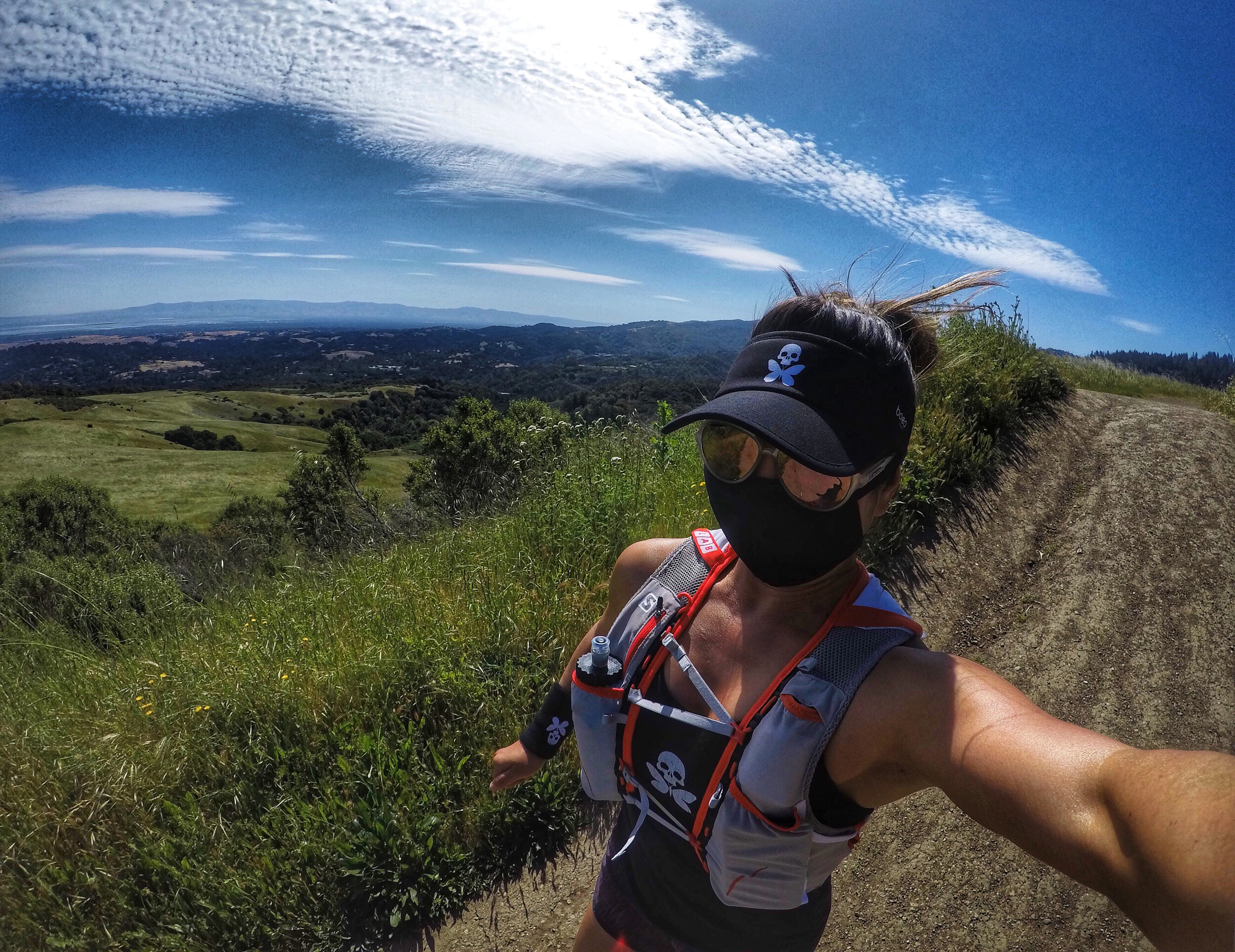
Some of my favorite trails opened up last week that fell within the 10 mile radius of my home. Returning to them felt like a homecoming- but my deep appreciation for the dirt paths lined with wildflowers, the stunning views, the warm sun kissing my skin, the fog hovering above the tree lines and the steep climbs was amplified. When something’s been taken away and later given back to you, there’s a bolt of joy and unwavering gratitude that shoots through your entire being. An unspoken promise to never, ever take anything for granted. I still miss hugs. But for now, I’ll accept the magnificent open sky and miles of single-track, running and singing and feeling alive in this beautiful and broken world.

A Lesson in Empathy.

Imagine someone in your life who is difficult and challenging. They may be passive aggressive, manipulate you, push your buttons, respond without thinking (or fail to respond at all), act without integrity, betray your trust, or gossip behind your back. Have someone in mind?

Good.

Now take a deep breath (or two).

Repeat very slowly-

JUST LIKE ME, (name of this person) desires to be loved.

JUST LIKE ME, ______ wants to be accepted and fully understood.

JUST LIKE ME, ______ wants to be seen and heard.

JUST LIKE ME, ______ has deep-rooted hurts and hidden fears.

JUST LIKE ME, ______ is trying his/her best.

I learned this exercise two years ago, and I often return to it when I’m confronted with challenging individuals. It provides distance between the acute negative emotions I feel and moves me closer to them as a fellow human being. Even with sharp differing political and cultural and societal views, this exercise in empathy puts me in their shoes. I realize by stripping everything else away, common humanity and truth remain. We are not so different from each other.

At the end of the day, it’s no longer ‘us’ versus ‘them.’

It’s just ‘us’.


Note to Self.

Felt appropriate to brush letter this message for myself this week.

As much as I value productivity and growth and achieving goals, I’m recognizing how valuable it is to just rest.

It’s my nature to accomplish all the things on my to-do list, so it’s been a deliberate act of recalibrating and slowing down and drawing boundaries to ensure that my energy levels are sustained. It takes a conscious effort to spend your time in a meaningful way, versus allowing it to be diluted in the minutiae.

Speed is one thing- merely going fast.

Velocity is different. It’s speed with a specific direction.

Let yourself rest. Tune out the excess. Then move with precision towards the things that truly matter.

Deliberate Daydreaming.

The phone gives us a lot but it takes away three key elements of discovery: loneliness, uncertainty, and boredom. Those have always been where creative ideas come from.
— Lynda Barry

Try this simple experiment:

Go for a walk without your phone. Stand in line at the grocery store without looking at your phone. Eat your meals without your phone on the table. Go to bed without your phone in the room.

At first you may feel anxious (at least, I did). And then you may begin to embrace your own thoughts and find your mind wandering and daydreaming. You may have new ideas about a business, a place you’d like to visit, a recipe you’d like to try, a person you’d like to connect with. Trust the flow. It’s fun to see where our mind goes when we give it the freedom to wander.

I find it most fascinating when I ask myself bigger questions:

  • What’s one thing I could experiment living without for a week?

  • If I gave a 20 minute TED talk, what’s the message I’d love to share?

  • If I was asked to teach two Skillshare classes, what would I teach?

  • What are the top three most amazing experiences in my life so far?

  • How would I live a meaningful life if I was blind? Deaf? Paralyzed?

  • Who are my top 3 heroes? What do they have in common?

  • What are some topics I am disinterested in? How can I learn more about them in order to appreciate them?

  • Who am I fascinated by, and what qualities do they have?

We’ve all had plenty of input (social media, news, notifications, email). It’s fun to allow your mind to direct its own entertainment. Follow the flow of your ideas. Ride the wave. Put your hands up and surrender to the creative energy you naturally have within you.

Flowing Together.

Today’s alcohol ink art. Meditative and fluid, like the ocean.

This pandemic teaches us we are not separate from one another, from the earth, from Nature herself. A virus we cannot see has radically transformed our sense of normalcy. We cannot hug our loved ones, we must stand 6 feet apart at the grocery store, we are quarantined inside our houses and wear masks when we need to venture out for the essentials.

And yet.

I am experiencing more interconnectedness than separateness in my life. I walk and make eye contact and nod my head with solidarity at strangers on the sidewalk because they cannot see my smile underneath my mask. What was a once-a-week call to my parents has morphed into daily Facetime conversations about our days, what we ate for dinner, what we saw on our walks. The mundane has become beautiful because we paying better attention to our lives. We connect together over those simple moments. Friends from the past have resurfaced and we’re dusting off where we left off with newfound excitement. Thoughtful, heartfelt handwritten cards appear in my mailbox like confetti. I connect more deeply with my clients because we are navigating the same changes, constraints, and uncertainty together.

At first I felt like a lonely trickle of water making its way down a mountain, searching for a place to rest and pool. Now, I am meeting with streams to form rivers, where together, ultimately, we join the sea.

Solitude.

Captured on this morning’s run. Learning to fully embrace this collective pause to think, create, and just BE.

“But your solitude will be a support and a home for you, even in the midst of very unfamiliar circumstances, and from it you will find all your paths.”
— Rainer Maria Rilke, Letters to a Young Poet

Exactly one year I wrote in my journal, “There is no despair for one who creates.” Lately, making art (actually, making anything) has been a raft that I can rest upon to save me from the river of despair. And surprisingly enough, I’m realizing how much solitude I’ve needed to reconnect to my creativity in a new and profound way. Disconnecting from the world has given me the opportunity to connect with deeper parts of myself. Silence and solitude have been tools to retreat from the world of push notifications and incessant news and chatter. Solitude has honed my ability to listen, think, compost ideas, and plant new seeds of insight.

Thomas Merton wrote, “The greatest need of our time is to clean out the enormous mass of mental and emotional rubbish that clutters our minds and makes of all political and social life a mass illness. Without this housecleaning, we cannot begin to see. Unless we see, we cannot think.”

Solitude and silence are the towels wiping away the grime and grit from the windows of my life. I see things more clearly now that I have the space to reflect and think without distraction.

I’ve experimented with turning off my WiFi completely at night. Not just putting all my devices on airplane mode- I’ve completely taken it a step further from the advice of a friend, and unplugged the entire router and modem. It’s been a game changer. I’ve had the most restful nights of sleep (last night was day 3), and I’ve experienced multiple dreams per night in detail. I wake up without email or news and begin my day in a mindful, thoughtful way. It has transformed my morning routine and my overall sense of rest and recovery. ‘Unplugging’ has had both physical and mental benefits for me.

This collective pause of shelter in place has had its ups and downs. But I’ve experienced a newfound sense of creativity in the solitude which has kept despair at bay. With everything we’ve lost and are grieving at this time, it’s helpful to remember what we have agency over. We can choose to create. We can choose to make. Make art. Make love. Make meaning. Make memories. Make poems. Make nourishing meals. Make music. Make connections.

Rilke was right- let us build our support and our home from our solitude. And from there, build and cultivate our community and connections with our creativity. There is no room in our home for despair.

Writing as a Practice.

A few weeks ago I had the pleasure of being interviewed on Gravitude Chats, a podcast series that interviews women sharing their stories of grit, grace and gravitas. This was an organic conversation surrounding the current situation of COVID-19, but it soon unfolded into a bigger conversation about writing as a practice. For me, journaling as a daily habit has allowed me to see my life from a different perspective- one that is both close-up and detailed, as well as provide enough objective space (as a reader going back over old journal entries) to notice the broader themes of my life.

By paying attention to what we pay attention to, this allows us to direct the course of our sails towards the seas we really want to explore. Writing helps with that. To notice what we care about, what irks us, what we’re curious about, what we love.

I hope this conversation inspires you to begin a writing practice. To not be afraid of the blank page, but rather to see it as your friend. A welcome mat into the beautiful home that you are.

And, if you make it all the way to the end of our conversation in this video, I’d love to hear what your ‘sunflowers’ are in your life at this time.

Blessings,

Julianne