Your Place.

Coastal Trail, Marin Headlands

You do not have to be good.
You do not have to walk on your knees
for a hundred miles through the desert repenting.
You only have to let the soft animal of your body
love what it loves.
Tell me about despair, yours, and I will tell you mine.
Meanwhile the world goes on.
Meanwhile the sun and the clear pebbles of the rain
are moving across the landscapes,
over the prairies and the deep trees,
the mountains and the rivers.
Meanwhile the wild geese, high in the clean blue air,
are heading home again.
Whoever you are, no matter how lonely,
the world offers itself to your imagination,
calls to you like the wild geese, harsh and exciting
over and over announcing your place
in the family of things.
— Mary Oliver, Wild Geese

The Secret to Happiness and Longevity Lives in Your Gut

Enjoyed my time recording in the studio as a guest on the radio show "Aging By The Bay"

Please enjoy this fun conversation I had about nutrition, the gut microbiome, mindfulness, movement, and stress management....pretty much all of my favorite things.

Our guest is Julianne Kanzaki, Registered Dietitian talking about how healthy eating habits and your gut are keys to happiness and longevity. She will also share how she helps others experience more well-being in all areas: body, mind and spirit. Guests: Julianne Kanzaki, MPH, RDN --- Follow us on Twitter: @AgingByTheBay Catch the latest episodes and subscribe to “Aging By The Bay” on iTunes, Google Play, Stitcher, and TuneIn. For more information about “Aging By The Bay” visit us at http://www.agingbythebay.com/about-us.html Related episodes can be found at http://www.agingbythebay.com/shows.html. Music Credit: Contact: info@AgingByTheBay.com Web: www.agingbythebay.com Sponsor: ComForCare

One Thing.

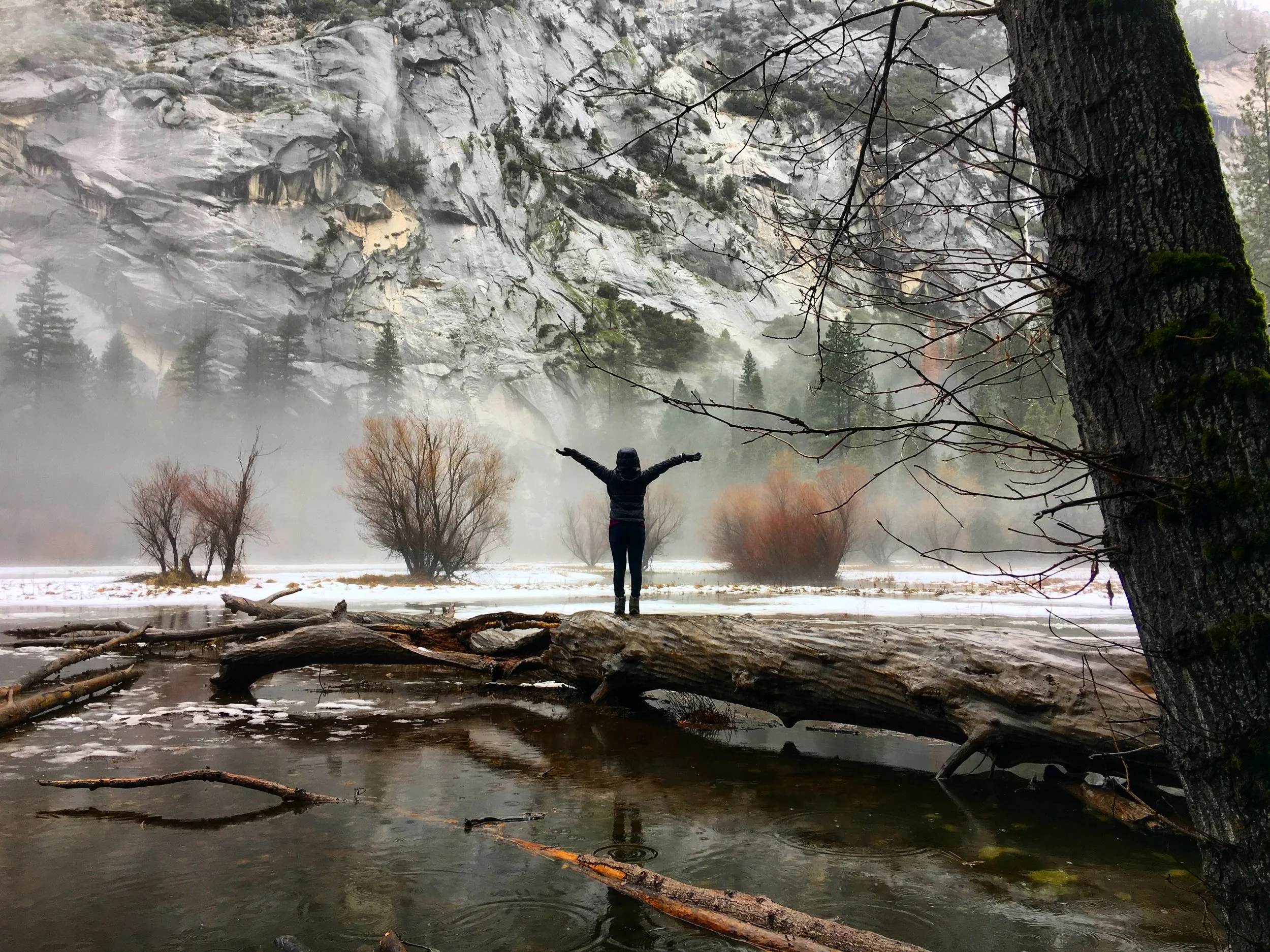
Mirror Lake, Yosemite National Park

You must learn one thing:
the world was made to be free in.

Give up all other worlds
except the one to which you belong.

Sometimes it takes darkness and the sweet confinement of your aloneness
to learn

anything or anyone
that does not bring you alive
is too small for you.

— David Whyte

Warning: If you understand the depth of Whyte's words and incorporate them into your heart, expect massive shifts to happen in your life. I write from experience.

The Importance of Being.

I'm your typical Type-A person. I derive a huge amount of joy from creating to-do lists, clearly knowing what I'm supposed to accomplish in a day, and adhering carefully to that schedule. 

I was thinking about this today as I went on my evening walk. How easy it is to get consumed in what we do. What we do in a day, in a lifetime. I've recently made it a habit to start looking UP more. When I look up, I'm forced to take my attention away from what is in front of me. I have to be completely still and present.

Redwood Regional Park, Oakland. 

As the sun was setting tonight, this question settled into my mind- "Am I a human doing or a human being?"

It was a humble reminder that at the end of our lives, no one really cares what we did. They care instead, about who we were. How present we were when we listened. How generous we were with our time and our resources. How we gave the best hugs and allowed people to feel loved.

I want to be a human being (and I think you may as well).

Being present.

Being generous.

Being loving.

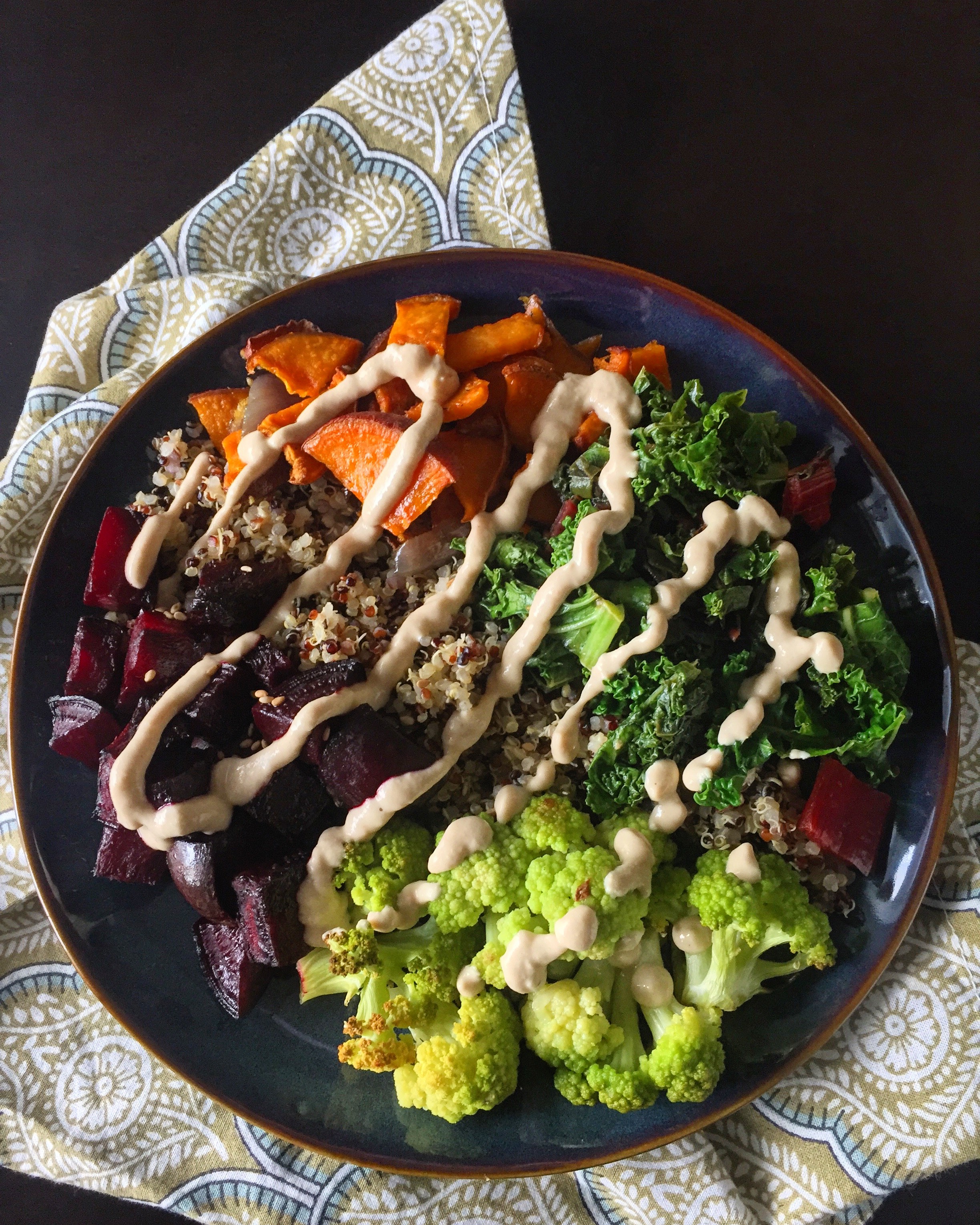
A Delicious and Easy Buddha Bowl for the Time-Crunched and Busy.

I heard an analogy yesterday that shifted my thinking. Arianna Huffington, the President and Editor-in-chief of the Huffington Post, made the observation that we treat our smartphones with more respect than our own bodies. Wow. Think about that. It's true! We make it a point to have our phones fully charged, and when we travel we make sure we have a back-up charger or battery so they don't die. We buy special cases for them and make sure they're updated with the latest apps.

It's easy for most people to skimp on sleep or eat unhealthy food because they're so busy and don't have the time.  But continuing this pattern sets them up to live in a way where they're running on empty and never fully charged.

Here's an easy solution. Put on some of your favorite music. Chop all of your favorite veggies (sweet potatoes, red onions, beets, cauliflower, bell peppers, squash, broccoli, or whatever sparks joy for you), drizzle some olive oil to lightly coat them, and roast in the oven at 400 degrees F. Stir every 20 minutes or so, until they are done (usually 45 minutes). While those are roasting, prepare 1 cup of dry quinoa with 2 cups of water on the stovetop. Bring to a boil, then simmer on low until the quinoa is fluffy. You can add your favorite dressing, or try this one:

Cashew Miso Ginger Dressing:

  1. In a small bowl, add enough hot water to cover 3/4 cup of cashews. Let this sit/soak until the cashews are softened.
  2. Pour the water and cashews into a blender and blend until smooth.
  3. Add 1 tsp miso paste, 1/2 juice of a lemon, 1 tsp grated ginger, 1 tsp soy sauce
  4. Blend together, and add water to thin out the consistency as desired.

Arrange your roasted vegetables, tofu, beans, or other colorful whole foods on top of the bed of quinoa, and drizzle with your dressing of choice. This meal is vibrant, full of life-giving energy, and delicious. When you nourish your body with nutritious food, it's like plugging into the power outlet. You're recharging yourself so you can be more present, more focused, and more loving to your friends and family. Enjoy!

The Last Tea Ceremony.

#kanzakicrafted

We sit across the circular office table from each other, important papers stacked and pushed to the side to make space. Four white tea cups line up in perfect formation, the edges of their lips touching ever so slightly. I notice the afternoon sun and the shadows it casts through the grimy hospital windows. But mostly, I notice the heavy layer of sadness that hovers and weaves itself into the silence. I realize this is our last tea ceremony we'll share together at work. These small pockets of sacred stillness we've intentionally built into the craziest of days. These deliberate pauses. Next week I leave this hospital, this workplace I've called home for more than a decade- in order to fully commit my time to my own private practice. With the excitement and anticipation and euphoria I've been experiencing lately, suddenly the sadness hits me like an unexpected blow. These are the moments I am going to miss the most. A knot begins to form in my throat and I blink back the tears. It's starting to sink in.

I focus my attention on M. He is careful and deliberate in his preparation of the tea. I watch as he adds the boiling water into the teapot, closes the lid, and pours water over the entire teapot from above. Observing him perform this ritual calms me. We sit and wait as the leaves steep. He closes his eyes and inhales deeply, so I do the same. We exhale, and continue a few more breathing cycles together. 

If the tea doesn't steep long enough, it is weak and insubstantial. Left in the teapot for too long, the tea turns astringent, harsh, bitter. It is all about timing. We both know it's time. It's my time. I am ready to be poured out now, to fill those cups. 

M has witnessed firsthand the wreckage and the journey I've embarked upon to rebuild my life and find my own Truth. The last six years were an intentional restructuring of priorities, redefining the ways I contribute to the world, and most importantly, finding myself again. It has been a laborious mosaic of sorts- a gradual accumulation of truths, of small pushes in a new direction, and learning to recognize and listen to that calling that deeply satisfies my soul. 

I look at M and feel so much gratitude. To be fully seen and accepted and to have another bear witness to your own becoming both personally and professionally in a workplace is a true gift. It's rare. It's shaped me. These are the things I will miss the most I say to myself again.

Silently and in unison, we lift the cups to our mouths. The rich, earthy pu-erh tea fills us. We inhale and exhale. I still notice the sadness there, lingering in the background. But my lips curl up ever so slightly into a smile and my eyes soften and relax. Grateful to have experienced this important chapter in my life. For friendship. For tea.


We Are the Forest.

Sunrise miles at Redwood Regional Park

Underneath these Redwood trees is a rich root system that allows them to communicate with each other. It's an entangled and highly efficient web of information that travels underground, alerting them to the presence of antagonistic fungi or insects, and allows nutrients and water to be optimally divided so photosynthesis takes place evenly.

When trees are being attacked by certain insects, they'll emit a scent which alerts and warns neighboring trees of the imminent danger. As a result, these trees will begin to release a scent that will attract those insects' predators. When an older tree falls, this highly integrated root system allows neighboring trees to continue to feed this parent stump for thousands of years, nourishing it and keeping it alive.

But interestingly enough, trees not only share food with their own species, but they even go so far as to nourish the species of other trees. Other trees classified as competition. Why? Because there are advantages to working as a collective whole. Together, the trees create an ecosystem that moderates temperature extremes and allows them to store a great deal of water and humidity that protects the forest as a whole. A tree alone is not a forest. Isolated from the rich root system and network, it cannot establish a consistent local climate. If every tree only watched out for itself, it would dry out in the summer heat. It would quickly fall prey to insects and wouldn't sustain nutrients. It would easily die.

It's time to send out our nutrients to our neighboring tree stumps who still need our help. To forget about our differences and communicate across species in order to survive. It's time to work together as one collective forest.


Three Important Questions.

It's been said that Native American medicine men ask the sick three important questions before beginning any healing treatment:

  • When was the last time you danced?
  • When was the last time you sang?
  • When was the last time you told your story?

Their answers provide valuable feedback and help them determine how severe the injury, illness and sickness is. We are so much more than our physical bodies. Food and exercise are important, but let's not forget the importance of allowing ourselves to play. To create. To take the time to tell our stories. 

How to Know Whether to Ignore or Follow Your Fear

Stepping out...  (Mirror Lake, Yosemite National Park)

This whole time I thought there was only one type of fear. The deep-rooted, irrational, worst-case scenario lizard-brain fear. The kind that tells us to avoid that conversation when our partner says, “We need to talk” because it’s uncomfortable and we might get broken up with and never find love again. It’s the fear that tells us not to press ‘publish’ because people may not like what we wrote. It warns us that if we quit our full-time job, we won’t be able to pay our rent or afford health insurance. We’ll be forced to eat $0.10 ramen and everyone will shake their heads and say, “I told you so.” The Hebrew word for this type of fear is pachad.

There’s another kind of fear. But it has a much different type of energy. It’s what you feel when you step onto the stage as the lead actor and you’re ready and excited and the energy is pulsing through your veins. It’s standing underneath El Capitan and feeling awe-struck amidst the grandeur of nature. It’s what washes over you when you hold your newborn for the first time. This is the overwhelming feeling of reverence and magic when we enter into a larger space (physical or psychological) than we’re used to inhabiting, or when we’re filled with more energy than we’re used to possessing. It’s when we’re in the presence of God and deeply connected to our spiritual essence. It’s a holy fear. The Hebrew word for this is yirah.

When we’re still and quiet, we can discern one from the other. Pachad keeps us small, safe and hidden, but discontentment silently breeds here. Most people’s lives are largely dictated by pachad. But yirah feels much different. We lean into this when we listen to our intuition, turn our heads to acknowledge what our hearts are crying out for, and follow our calling.

Truly stepping into our lives means learning how to manage the screaming pachad. To soothe it, quiet it down, rock it to sleep. And then tiptoe away and swing open the door and step fully into yirah, which has celebratory balloons and streamers and confetti and has been waiting for us to cut the cake all along.